Table Of Content

Also the Arrow’s automatic gear extension system is a good example of how safety features can spawn new hazards even while eliminating old ones. In high-power, low-airspeed configurations, the system could either delay retraction or lower the gear at an unwanted time. Among the best and most expensive methods of directing a wastegate's actions is an automatic controller — of which there are several types. Suffice it to say that an automatic controller maintains a manifold pressure the pilot asks for through throttle position.
Airliner cruise
The original Arrow compared well with the Mooney in some departments, such as roominess and cost, but fell short in terms of speed. Those are compelling traits long recognized by flight schools who swear by them as relatively economical complex trainers. Plus, owners report happy relationships with the Arrow’s combination of useful load and range.
Takeoff distance over 50-ft obstacle
A new cowling rounded out the deal and announced to the ramp rats your bird was turbocharged. As the aircraft consumes fuel, its weight decreases and the optimum altitude for fuel economy increases. For traffic control reasons it is usually necessary for an aircraft to stay at a cleared flight level. On long-haul flights, the pilot may ask air traffic control to climb from one flight level to a higher one, in a manoeuvre known as a step climb. Soon, however, the engine began earning a reputation as tricky to operate and prone to self-destruction. It didn’t help much when, in 1979, Piper combined its T-tail airframe with the turbo’d engine, even if the powerplant got a different suffix and much-needed TBO extension (from 1400 to 1800 hours).
Arrow Accidents: Engine/Mech
My airplane was bought with 2400 TT, 400 SMOH and 300 on a new Hartzell three-blade prop. The benefits of the three-blade are better climb and less vibration; it eliminates that red arc on the tach between 2100 and 2350 RPM. So far, Ive logged over 150 hours in it, and find it to be a very good platform for long cross-countries.
Marketplace
However, I realized that the Arrow was really perfect for my typical 300-mile or shorter mission. While not as fast as a Mooney or Bonanza, it is more efficient and more comfortable. Compared to a Mooney, it can carry plenty of weight fully fueled—fill the tanks and you can still carry four average adults or two adults and plenty of baggage, and it is far cheaper to operate. I bought my 1973 Arrow II with Knots2U speed modifications in December of 1999. I find that I need to plan ahead to slow the aircraft from cruise, unlike the Arrows I flew without the mods. However, once slowed, the aircraft has the sink rate of a typical Arrow.

It's largely a set-and-forget system and reduces pilot work load tremendously. Introduced in 1977, the Turbo Arrow promised to bring turbocharging to everyman. The Arrow's combination of a simple, common airframe and no-frills turbo engine would be one shared by several manufacturers in the late 1970s. In 1976, Rockwell brought out the 112TC, with a turbocharged, carbureted 210- horsepower Lycoming in place of the straight 112's IO-360. Performance gains at low altitude were slight and only marginally better above 10,000 feet.
All Piper Aircraft Aircraft
PIPER CHEROKEE 235" PATHFINDER/DAKOTA"€ - Plane & Pilot
PIPER CHEROKEE 235" PATHFINDER/DAKOTA"€.
Posted: Thu, 28 Jan 2016 08:00:00 GMT [source]
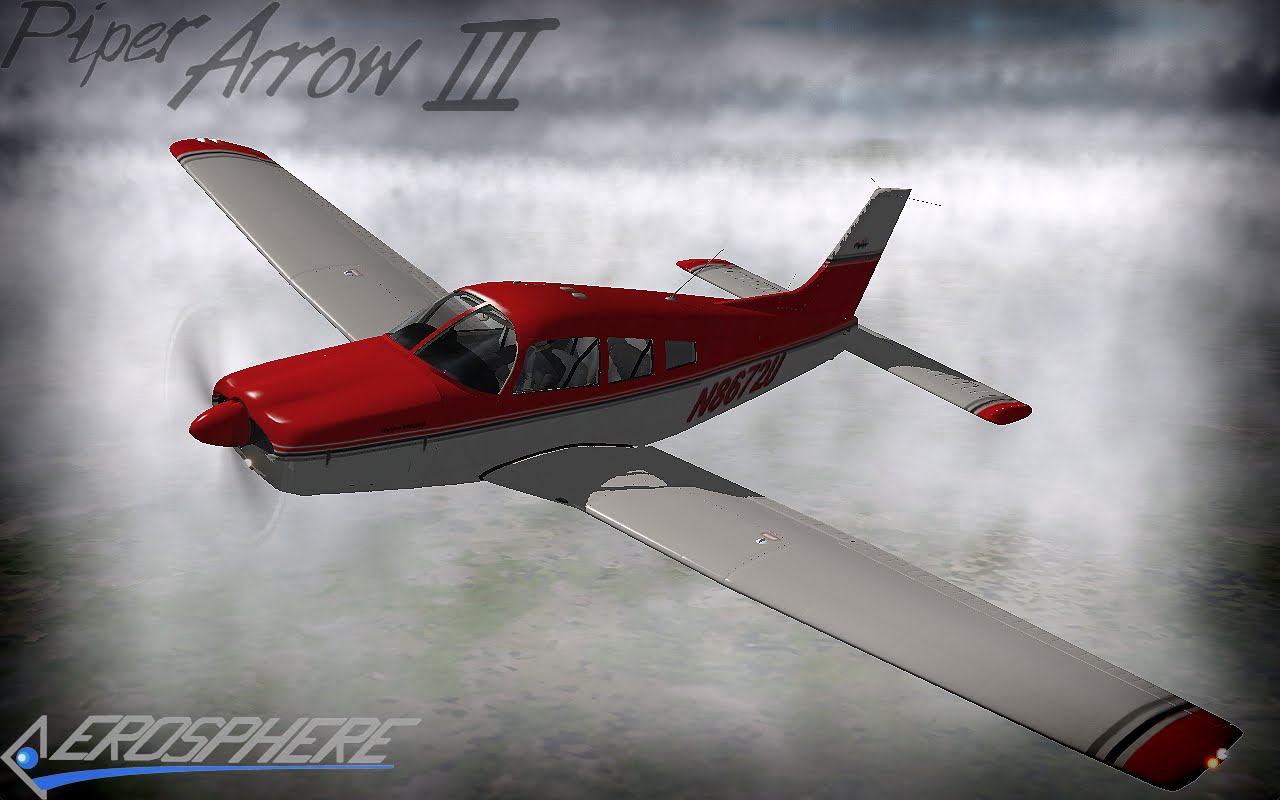
It was a bit smaller than the PA-24, however, with a similar idea or concept- a low-wing, one-engine plane ideal for application as both personal commuters and training aircraft that can accommodate four passengers. The original design of the Piper PA-28 instantly spawned a lot of variants all through the year 1960s, which takes account of adaptation to a multi-engine. A Turbo Arrow costs several hundred thousand dollars less to acquire, is just a couple of 10s of knots slower and burns two-thirds the fuel.
It is offered as a complex trainer though lots of pilots still love it as a personal commuter due to its low price. Almost 7,000 Piper Arrows are produced since 1967, and the plant keeps on manufacturing until now. We will do slow flight, approach and departure stalls and recoveries, simulated engine failure and a handful of touch-and-goes. Because of the capabilities of this aircraft, we include at least one high-altitude flight. This allows the pilot to understand the use of supplemental oxygen as well as turbo operation where it matters. With respect to costs of ownership, my annual insurance premium is around $1300 for $1 million smooth liability and $115,000 hull value.
Piper Arrow Marketplace
With all these variations, it is impossible to quote prices for insurance in individual cases. However, one source quotes cover for qualified pilots requiring only liability coverage as between $160 and $260 per year and for insurance including hull coverage of $440 – 1,050 per year. You would need to contact a specific insurance company to get a more precise quote. Premiums depend on the type of aircraft and its value, what the aircraft is used for, and the pilot’s qualifications. However, in general terms, the PA28 series are all easy aircraft to insure. At least one aviation insurance company puts it in their top ten list of easiest aircraft to insure.
I had no experience with the T-tails, but heard rumors that the aircraft required extra handling to fly. I decided to fly it with the owner’s CFII and put it through the paces. I learned that most of the T-tail rumors are simply that—rumors. Then there are Arrow pilots who lose their engines and decide to ditch with the gear up. Unfortunately, some forget to override the automatic extension system. The gear plops out seconds before splash-down—sending the Arrow head over heels.
With the kit installed, however, Turbo Arrow pilots now must make extra effort to avoid overcooling during descents. Magneto arcing Another problem was magneto arcing or missing at high altitudes where the thin air has less of an insulating effect. It wasnt until 1983 that Piper begin installing pressurized mags and offering retrofit kits to owners in the field. Owners report no problems with loading balance on the Turbo Arrow, unless it has air conditioning, since the 60-pound rear compressor limits rear-seat and baggage loading somewhat. So when the Turbo Arrow owner sets what he believes to be a 75 percent power at 14,000 feet, according to the book, he actually is pulling closer to 83 percent power.
Tiedown at Manassas, Va. is $70/month, insurance is now $1,725/year ($90,000 hull/$1 million liability). A five-year printout of FAA Accident and Incident Reports for the above aircraft from that time disclosed no fewer than 54 instances of powerplant failure in those aircraft. Furthermore, the engine stoppages werent the result of typical pilot errors such as fuel mismanagement, fuel exhaustion, etc. They occurred from failing connecting rods or rod bolts, broken crankshafts and damaged pistons. But it must be conceded that the turbos on the Arrow will yield a decent climb into double-digit altitudes. And owners happily tell of getting climb rates of 800 to 1,000 fpm all the way up to 10,000 feet, with loads under gross weight.
It should be noted that, for the same basic engine, Mooneys power charts show up to three inches in MP variation for constant power at various altitudes. Similar variations are listed in Pipers own charts for the Seneca III, which has just about the same engine as the Turbo Arrow. After all, the same basic turbo powerplant had transformed the Piper Seneca from a dog to a twin of high pedigree that was breaking sales records right and left. I know that I would not recover the cost of my recent upgrades if I were to sell, but I have decided this Arrow is a keeper. It may not be an airplane that is really great at any one thing—there are faster planes and better load-hauling planes. But it is reasonably good at a lot of things—a great combination of acceptable speed, decent payload, efficiency and low operating costs.